The Legacy of War Admiral: A Racing Champion

War Admiral stands as a remarkable testament to excellence in American Thoroughbred racing, renowned for his unmatched achievements and enduring legacy in the sport's history.
War Admiral, born on May 2, 1937, at the illustrious Faraway Farm in Kentucky, stands out as one of the most remarkable American Thoroughbred racehorses of the 20th century. As the offspring of the legendary Man o' War, War Admiral inherited the speed, stamina, and determination that contributed to his sire’s legendary status. Yet, War Admiral was not simply a reflection of his renowned father. He quickly established himself as a champion in his own right, showcasing a powerful build, adaptability on the racetrack, and an extraordinary drive to win. Recognized for his flawless racing technique, War Admiral became a beacon of excellence in the realm of Thoroughbred racing throughout his career in the late 1930s and early 1940s.
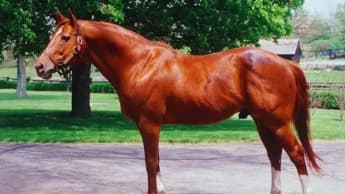
War Admiral possessed an impressive presence both on the racetrack and beyond, quickly becoming a household name during his era. He captivated fans’ hearts and emerged as a symbol of America’s golden era in horse racing. Notable for his striking black coat and a distinctive white blaze on his face, War Admiral's grace and powerful gait were truly remarkable to witness.
Achievements in Career
War Admiral's racing career lasted from 1938 to 1941; however, it was the peak period from 1937 to 1939 that truly established him as one of the legends of the sport. Here are some of the significant milestones that highlighted War Admiral’s remarkable career:
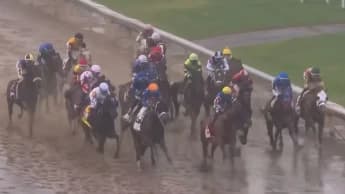
1937 U.S. Triple Crown Champion: The pinnacle of War Admiral’s career occurred in 1937 when he claimed victory in the U.S. Triple Crown — consisting of the Kentucky Derby, Preakness Stakes, and Belmont Stakes. He achieved his Derby victory on May 8, 1937, winning against a field of 12 contenders and showcasing his remarkable skill over 1.25 miles. He then followed this with a commanding performance in the Preakness Stakes on May 15, 1937, and sealed his Triple Crown victory with an impressive win in the Belmont Stakes on June 5, 1937. His impeccable performances in these distinguished races established him as one of the most exceptional American racehorses in history.
Success in Major Handicap Races: War Admiral’s brilliance was not confined to the Triple Crown alone. He also triumphed in numerous prestigious events, such as the Washington Handicap (1937), the Santa Anita Handicap (1938), and the Chesapeake Stakes (1939), which played a significant role in boosting his fame. These victories demonstrated War Admiral’s ability to thrive not only in the spotlight of the Triple Crown races but also in the challenging and rigorous arena of handicap races, where horses are required to carry extra weight to create a more level competition.
The Match Race with Seabiscuit: One of the most iconic moments in American sports history occurred during the famous 1938 match race between War Admiral and the legendary Seabiscuit. This event, hosted at Pimlico Race Course in Maryland, was highly anticipated and drew significant attention. War Admiral, who held the title of Triple Crown champion, went head-to-head with Seabiscuit, a horse that had become a symbol of the underdog narrative captivating the public. This showdown was promoted as a monumental battle between two greats, but despite War Admiral's impressive lineage and speed, he was ultimately defeated by Seabiscuit in an exhilarating race. Although War Admiral lost, this outcome only served to boost his popularity and solidify his legacy as one of the greatest racehorses to ever compete on the track.
Champion of the Year: War Admiral earned the title of American Horse of the Year for three straight years — 1937, 1938, and 1939 — an achievement that underscored his consistent excellence and unmatched skill. He remained among the highest-ranked horses in the nation, even in the face of challenges and tough competition. His performance during these years highlighted his resilience and his capacity to compete at the top level year after year.
Statistics
The career statistics of War Admiral illustrate the remarkable journey of a horse whose exceptional abilities and determination elevated him to iconic status:
Statistic
Information
Racing Events
Twenty-six
Victories
Twenty-one
Runner-Up
Three
Position: Third
2
Total Earnings Throughout Career
273,240 dollars (a substantial amount for that era)
Professional Achievements
Out of 26 races, he achieved 21 victories, 3 second-place finishes, and 2 third-place finishes.
Remarkable Victories
Kentucky Derby (1937), Preakness Stakes (1937), Belmont Stakes (1937), Washington Handicap (1937, 1938), Santa Anita Handicap (1938), Chesapeake Stakes (1939).
Strength and Recovery
Though War Admiral's career was filled with significant accomplishments, it also faced difficulties and instances that tested his resilience profoundly.
Challenges from Injury: At the beginning of his career, War Admiral faced a significant challenge when he sustained a foot injury. This setback necessitated several months of recovery, leading to uncertainty about his ability to return to racing and continue his successful trajectory. Nevertheless, War Admiral made an impressive comeback from this injury, showcasing his unparalleled heart and determination. His quick return to the racetrack not only highlighted his physical resilience but also reinforced his status as a champion capable of triumphing over adversity.
The Loss in the Match Race Against Seabiscuit: While War Admiral's defeat to Seabiscuit in the much-publicized 1938 match race was a significant setback, it stands as a powerful reflection of his resilience. Rather than being defined by this disappointment, War Admiral continued to perform at the highest tiers and achieved victories in several other prestigious races. This defeat only served to further solidify his legacy in the history of horse racing, illustrating not only his triumphs but also his remarkable ability to face setbacks with dignity and determination.
Heritage
The legacy of War Admiral is permanently etched in the annals of American horse racing. His triumph in the Triple Crown stands as one of the most significant accomplishments in the sport, and his fierce competition with Seabiscuit continues to inspire the fascination of racing fans and sports aficionados alike.
National Museum of Racing and Hall of Fame: In 1958, War Admiral was honored with induction into the National Museum of Racing and Hall of Fame, solidifying his status as one of the greatest figures in the history of the sport. His accomplishments, both on the racetrack and beyond, have established him as a pivotal character in the narrative of Thoroughbred racing.
Bloodlines: The legacy of War Admiral has been carried on through his descendants. His son, Peace Chance, became a prominent sire, and this lineage has maintained his impact on horse racing well beyond his retirement. War Admiral’s significance in the history of breeding reflects his remarkable stature in the sport.
Cultural Impact: War Admiral's renown extended well beyond the racetrack. He emerged as a symbol of American greatness during a period when the nation was facing the challenges of the Great Depression. His rivalry with Seabiscuit, a horse that overcame humble origins to achieve fame, inspired numerous books, films, and documentaries, establishing War Admiral as a notable figure in American popular culture.
Future Perspectives
Although War Admiral's racing career concluded many years ago, his impact on the sport of Thoroughbred racing remains significant. The benchmarks of excellence he established are still unrivaled, and contemporary racehorses are frequently measured against his legacy. His narrative continues to be shared across generations, ensuring that future fans of horse racing will undoubtedly regard War Admiral as a prime exemplar of true championship spirit.
Future Comparisons: In the present day, the accomplishments of War Admiral continue to establish a benchmark for excellence in racing. His exceptional capacity to deliver consistent performances across various tracks and conditions remains a standard for contemporary racehorses.
Influence on Racing Culture: As the sport progresses and new horses gain recognition, the legacy of War Admiral remains strong. His status as a Triple Crown champion, his strength in overcoming challenges, and his contributions to the history of horse racing guarantee that his name will always be remembered. His narrative will continue to motivate upcoming generations of horse racing fans and aspiring champions.