Man o' War: The Legendary Racehorse
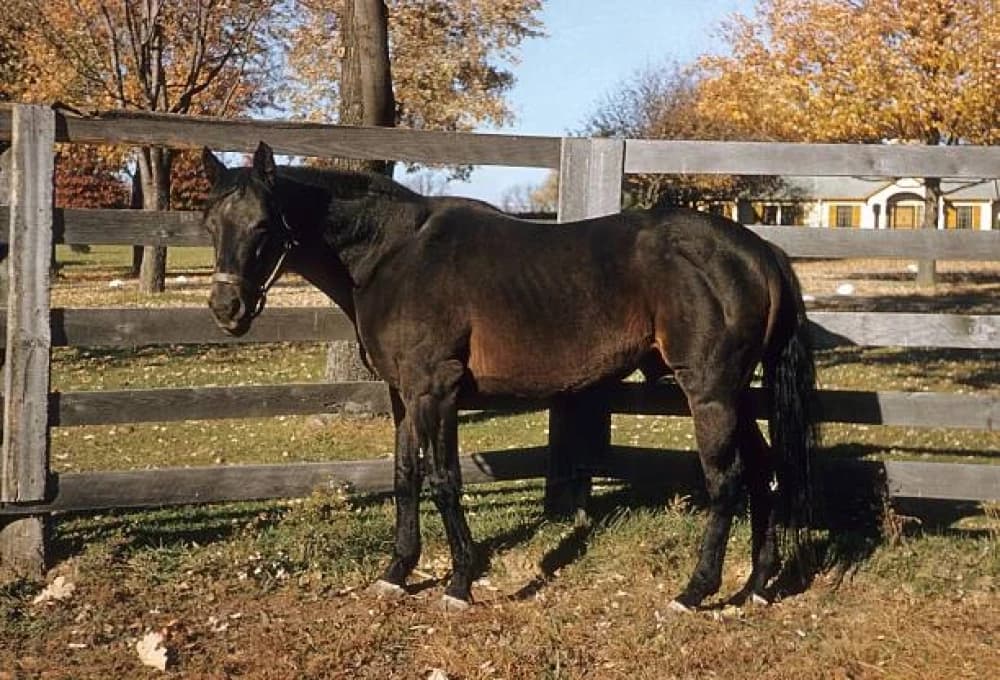
Man o' War, born in 1917, became one of the greatest racehorses in history, inspiring a legacy that continues to shape horse racing and breeding to this day.
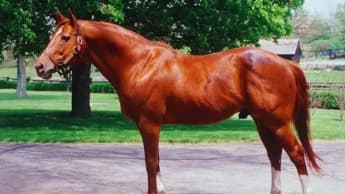
Man o' War, born on March 29, 1917, at Faraway Farm in Lexington, Kentucky, is considered one of the greatest racehorses in history. His stunning chestnut coat and a distinctive white star on his forehead made him easily recognizable. With the guidance of the legendary trainer Louis Feustel and the skilled jockey Johnny Loftus, Man o' War captivated the hearts and imaginations of racing enthusiasts globally. His racing career, which lasted just over two years, saw him achieve legendary status through his extraordinary speed, stamina, and seemingly invincible performance on the track. His incredible achievements went beyond his individual races, profoundly shaping the future of horse racing.
Key Achievements in His Career
In June 1919, Man o' War kicked off his career with an impressive victory in his first race at Belmont Park. He got off to a strong start, found his rhythm, and effortlessly sped to victory, finishing six lengths ahead of the other horses.
1919-1920: The initial phase of his career was characterized by a streak of commanding victories, with many of his wins achieved by significant margins. His remarkable ability to dominate his rivals became a defining feature of his career, garnering him admiration from both fans and experts alike.
In 1920, Man o' War's career experienced a remarkable ascent, highlighted by his victory in the renowned Belmont Stakes. This performance was nothing short of legendary—he triumphed over his competitors with an incredible margin of 20 lengths, marking one of the most outstanding victories in the race's storied history.
In 1920, Man o' War achieved another remarkable victory in the Preakness Stakes, winning by a significant margin. His overpowering performances in these Triple Crown races contributed greatly to his rising popularity.
1919-1920: Among the other significant victories in his career were the Dwyer Stakes, Lawrence Realization Stakes, Travers Stakes, and the Kenilworth Park Gold Cup, to name a few. Each of these triumphs solidified his status as a racing legend, and he came to be seen as a horse capable of accomplishing the seemingly unattainable.
1919-1920: Despite his remarkable success, his sole loss occurred during the Sanford Memorial Stakes in 1919. In this race, where he was the clear favorite, Man o' War faced an unexpected defeat by a horse named Upset, who finished ahead of him. This surprising result sent shockwaves through the racing community, as it was virtually unthinkable for Man o' War to be defeated.
1920: Following his loss, Man o' War made a remarkable comeback, triumphing in the Kenilworth Park Gold Cup and several additional races, further reinforcing his superiority on the racetrack.
Retirement: Following his remarkable achievements in 1920, Man o' War transitioned to stud at the age of three, concluding his racing career with an impressive record of 20 victories out of 21 races. Nevertheless, his influence as a racehorse would persist through his descendants, who would continue to propagate his extraordinary lineage into the future.
Statistical Data
Statistic
Information
Racing Achievements
21 races, 20 victories, 1 second place
Overall Winnings
Total earnings of $249,465, which is roughly equivalent to $3.5 million in today's currency.
Key Victories
Victories include the Belmont Stakes (1920), Preakness Stakes (1920), Dwyer Stakes (1919), Travers Stakes (1919), and Lawrence Realization Stakes (1919).
Significant Defeat
Sanford Memorial Stakes (1919) - lost to Upset
Victory Margins
Often recorded victories by substantial margins, notably a remarkable 20-length win in the Belmont Stakes.
Speed on the Race Track
Top speed of 43.1 miles per hour
Resilience & Comebacks
Man o' War's singular defeat, where he finished second in the Sanford Memorial Stakes, marked a pivotal moment in his career—not solely due to the loss, but rather because of his remarkable response to it. Despite the surprising nature of being defeated by a horse deemed as lesser, Man o' War exhibited extraordinary resilience. This setback was attributed to a range of factors: he was still maturing into his full potential, and it was one of the few occasions in which he faced a competitor delivering an exceptional performance.
Nevertheless, true champions are characterized by their capacity to bounce back from difficulties. Following his defeat, Man o’ War embarked on an incredible winning spree, overpowering his competitors in the races that followed. This comeback was not merely a personal victory; it demonstrated to the racing community that even the most seemingly unbeatable champions could face setbacks yet emerge even stronger.
Man o' War's tenacity on the racetrack contributed to his reputation as a horse whose character was as remarkable as his extraordinary abilities. He demonstrated a remarkable capability to bounce back from difficulties and sustain his dominance, a trait that garnered him admiration from fans and fellow competitors alike.
Heritage
The impact of Man o’ War reaches well beyond his time on the racetrack. He established a benchmark for all subsequent thoroughbreds. His remarkable career has shaped nearly every significant racing program, especially in the realm of breeding. The bloodline of Man o' War has produced some of the most illustrious horses in racing history, ensuring that his legacy endures long after his retirement.
In 1957, Man o' War was honored with induction into the National Museum of Racing and Hall of Fame, acknowledging his remarkable contributions to the sport of horse racing. His legacy continued through his son, War Admiral, who achieved the prestigious Triple Crown in 1937, thereby reinforcing Man o’ War’s esteemed status as a source of greatness in the racing world.
The extraordinary blend of speed, power, and determination exhibited by Man o’ War has motivated numerous horses and racing fans alike. His influence extended beyond his victories; he transformed the perception of the sport itself. His remarkable dominance on the racetrack elevated horse racing into a more thrilling and respected event.
Moreover, the legacy of Man o’ War as one of the most iconic horses in history has made his name a symbol of excellence within the realm of horse racing.
Future Prospects
Despite Man o’ War’s passing in 1947, his legacy continues to serve as a source of inspiration. His descendants have made significant impacts on the realm of horse racing, and his lineage remains a crucial component of contemporary thoroughbred breeding. As the world of racing progresses, it is evident that the remarkable heights attained by Man o’ War will endure in memory. His impact is present in the horses that break records and create history today, as well as in the breeding initiatives that draw from his extraordinary genetic heritage.
While it may be improbable for any horse to duplicate his remarkable achievements, the legacy of Man o' War will always be associated with greatness. As subsequent generations of racing enthusiasts and professionals look back on the sport's history, Man o' War's legacy will continue to serve as a benchmark for excellence, and his influence will surely persist in shaping the world of horse racing for many years ahead.