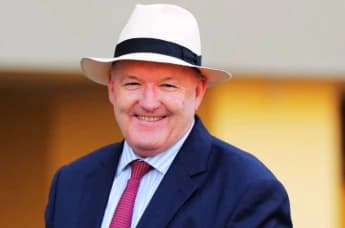
"Karen Wiltshire: Trailblazer for Women in British Racing"

"Karen Wiltshire's groundbreaking journey as the first professional female jockey in British flat racing exemplifies resilience and determination, paving the way for future generations while championing gender equality in a male-dominated sport."
During the late 1970s, it was uncommon to see a female jockey making waves in the predominantly male sphere of British flat racing, yet Karen Wiltshire's journey broke the mold. In 1978, Wiltshire made history by becoming the first professional female jockey to secure a victory on British soil, winning the Winterbourne Handicap at Salisbury aboard The Goldstone. Though her time as a jockey was short—spanning just three years, 18 races, and one win—her achievement stands as a significant landmark in the ongoing struggle for gender equality in sports.
Wiltshire's landmark victory occurred against the backdrop of the 1970s, a period when women in horse racing were still striving for the opportunity to compete at a professional level. This sport had been predominantly male for the first three centuries of its existence, and female jockeys were just beginning to break into the field. The Jockey Club made its initial cautious move in 1966 by permitting women to train horses, followed by the inclusion of female amateur riders in 1972 and the long-awaited authorization for professional jockeys in 1975. However, despite these halting advancements, it was evident that women still faced significant challenges in establishing their presence in racing.
Wiltshire was never one to shy away from challenges. Having been educated at a convent and trained as a show jumper, she reached out to Bill Wightman, a trainer from Hampshire, with a firm resolve to make a name for herself. In a field dominated by male jockeys, she encountered initial resistance. Wightman warned her that she would need to meet the same demands as the boys and would receive no preferential treatment. Nonetheless, her determination never wavered. After six months of dedicated effort, she secured her first race ride in May 1977—an impressive achievement that stemmed from her unwavering persistence.
In order to comply with the strict weight standards, Wiltshire pushed her body to its limits, reducing her natural weight from 8st 7lb to 7st 2lb, often through dehydration and demanding workouts—steps that distinguished her from her male peers, who typically refrained from such intense regimens. In a sport where appearance and identity were closely monitored, Wightman advised her to shorten her hair and compete under the initials 'K. Wiltshire' to mask her gender. Her first victory marked a significant milestone in British racing, as she guided The Goldstone to victory at Salisbury. This achievement was remarkable, yet it was not without its challenges.
During her career, Wiltshire encountered both blatant and subtle sexism. She describes distressing experiences, such as being attacked by a male jockey in the locker room and a fellow jockey striking her across the backside with a whip during a race. Nevertheless, in spite of these challenging situations, Wiltshire's resilience remained evident. She remembers using the self-defense techniques she acquired at her convent school and receiving assistance from a supportive male trainer when her breeches tore mid-race.
Despite the difficulties she faced, Wiltshire's trailblazing spirit made a lasting impact. She looks back with fondness on the friendships she developed with fellow jockeys, such as Lester Piggott and Willie Carson, who, although often lighthearted and teasing, also provided their support. A pivotal moment in which she asserted herself against the entrenched hierarchy occurred when she defended her right to keep riding The Goldstone after a training session that was regarded as merely to “get him fit.” With the support of Wightman, Wiltshire overcame the preconceived notions held by male jockeys, demonstrating her value in a male-dominated field.
At 24 years old, Wiltshire stepped away from racing after reaching the age limit for claiming a weight allowance. When reflecting on her legacy, she contemplates how her career might have progressed had she been born 40 years later. Today, she acknowledges the strides made by female jockeys, especially Hayley Turner, who shattered barriers at Royal Ascot, and feels a strong sense of pride in these achievements. Yet, Wiltshire emphasizes that significant efforts are still necessary to attain true gender equality in the sport. While the gender ratio at racing schools has become more equitable, the representation of female jockeys in professional racing remains lacking.
In Wiltshire's perspective, Hayley Turner truly represents a breakthrough figure, as her ongoing achievements highlight the advancements made since Wiltshire's era. When reflecting on her own journey, Wiltshire acknowledges that she would have liked to remain in the racing scene for a more extended period, had the opportunity presented itself. Her mixed feelings of admiration for Turner’s accomplishments reflect the significant progress the sport has experienced, even as she grapples with the sense of not having accomplished more during her own riding career.
Although Wiltshire is no longer actively competing, her influence on the sport remains strong. Now in her sixties, she operates a fitness center in Havant, where she conducts cardio classes. Even after stepping back from professional racing, she is still closely engaged with the equestrian community. Each time she attends racing events, Wiltshire finds herself longing to be back on the track, participating in the sport she loves. Her legacy endures not only in the records of history but also in the ongoing progress of female jockeys, who draw inspiration from the pioneering figure that overcame immense challenges.
The narrative of Karen Wiltshire exemplifies determination, resilience, and an intense love for racing that overcame societal gender constraints. Although her time as a jockey was brief, the paths she paved for upcoming generations of female riders continue to advance the sport. Reflecting on her significant accomplishments, Wiltshire's sense of pride is evident; she was instrumental in a movement that transformed British flat racing forever.