"13 Common Misconceptions About Horse Riding Exposed"
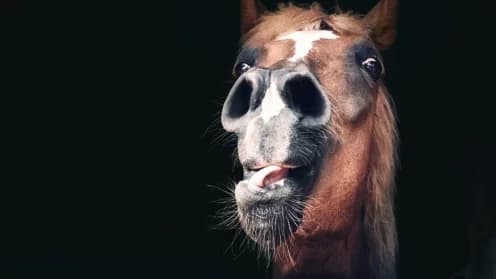
"Explore the intricate world of equestrianism, where passion meets precision. Discover the dedication, skill, and diverse disciplines that define horseback riding, and help dismantle the common misconceptions surrounding this beloved sport."
Any experienced equestrian will tell you that chatting about horses with those outside the riding community often leads to eye-rolls and polite, yet frustrated, replies. Despite the extensive knowledge and rich history behind the sport, many misconceptions and oversimplified views continue to overshadow discussions about horse riding. From misunderstandings regarding the physical requirements to misnaming equestrian disciplines, here are 13 comments that horse lovers encounter far too frequently.
1. The "Dancing Horses" Misconception
A question as ancient as dressage itself arises: “Oh, are you referring to the dancing horses?” Although dressage may appear to be a beautiful ballet, it is, in fact, a sport that demands a high level of skill, precision, and years of dedicated training—something that often seems overlooked. Who originated the concept of “dancing horses,” and when will this misconception finally be put to rest?
2. The Relentless “You Should Have Mastered It By Now”
"How long have you been riding? Haven't you learned how to do it by now?" It seems that all the years of training, practice, and skill development are overlooked when discussing horse riding. Professional equestrians commit themselves to honing their abilities for a reason, and it certainly isn’t because it’s something that can be effortlessly 'picked up' after just a few lessons.
3. The “You Must Know Someone” Statement
“I know someone who is quite passionate about horses—perhaps you know them?” This comment implies that the equestrian world is so limited that every rider must be acquainted with one another. Although we all have a common affection for horses, the equestrian community is extensive, making it improbable that you are familiar with every rider out there.
4. The Oversimplified 'Just Riding' Comment
“Why refer to it as horseback riding? Just calling it ‘riding’ is sufficient.” While this may seem inconsequential to those unfamiliar with the equestrian world, for individuals who have dedicated years to riding, the difference holds significant value. It is not merely about “riding” — it is horseback riding, a pursuit that demands skill, connection, and intense concentration.
5. The Fitness Challenge
“Riding as exercise? Isn’t the horse doing everything?” It’s always surprising to encounter this remark considering the physical challenges that come with riding. From developing core strength to maintaining balance and flexibility, riding is an incredibly demanding activity that entails much more than merely holding onto the reins. The fact that it is recognized as an Olympic sport in various disciplines highlights its athletic nature.
6. Not All Equestrian Events Involve Racing
“So, which competitor do you think will win the race?” someone enthusiastically inquires as you get ready to go to Badminton or another event. The reality is that not every equestrian event is a race, and conflating different disciplines can be frustrating for those who understand the distinctions. Eventing, show jumping, and dressage each have their unique challenges and requirements.
7. Not Every Rider is a Jockey
The world of equestrianism is varied, yet a common misconception is that all riders are jockeys. Take Lottie Fry, for instance; she is among the leading dressage competitors and has no aspirations to participate in the Grand National. Recognizing the different disciplines within the sport is essential for appreciating the unique accomplishments of each rider.
8. A Pony is Not a Young Horse
“What an adorable pony! How big will it get when it becomes a horse?” This is a familiar question. A pony is always a pony, and even though there are some similarities in size, they are a unique breed with their own characteristics and a specific role within the world of equestrian sport.
9. Is Training Telepathic?
“Isn’t it possible for your horse to learn just by observing another horse?” If only it were that easy. Training a horse is about establishing trust, fostering communication, and practicing consistently. Horses do not inherently pick up skills simply by watching others — it requires time, patience, and the correct methods.
10. Clipping Is Not Harmful
Clipping, which is typically done during the colder months, is not an act of cruelty but rather an essential practice aimed at maintaining a horse’s comfort and performance. The belief that clipping is detrimental arises from a lack of understanding about its true purpose. It is not merely "shaving" — it is a deliberate and careful grooming process.
11. Zara Tindall is Not a Showjumper
Even with her achievements at the Olympics, numerous individuals still misinterpret Zara Tindall's career, wrongly identifying her as a showjumper instead of an eventer. This misunderstanding occurs frequently, even among the most casual followers of equestrian sports, despite her notable success and medal wins in eventing.
12. Not Every Event Involves Competing at Burghley
“So, you’re heading to Burghley this weekend — are you competing?” While being present at a notable event like Burghley is indeed a significant accomplishment, it's important to recognize that not everyone attending is there to compete. Many equestrian enthusiasts go to enjoy the spectacle and the sense of community among horse lovers, rather than just to take part in competitions.
13. The Constant Notting Hill Reference
“I saw Horse & Hound on television. Is it similar to the film 'Notting Hill'?” This question consistently arises whenever individuals discover that you are employed by a horse-related publication. While the frequent mention of Hugh Grant and Julia Roberts can become somewhat tedious, it at least demonstrates that the movie left a lasting impact.
The 13 statements mentioned are not merely innocent errors; they highlight a significant misunderstanding of the commitment and intricacies involved in equestrianism. Although horse riding doesn't always receive the acknowledgment it merits as a legitimate sport, it's essential for those outside this community to recognize the dedication and expertise required. Let's foster a more informed dialogue by dispelling these outdated misconceptions and valuing the sport for the rich, varied, and challenging endeavor that it truly is.